
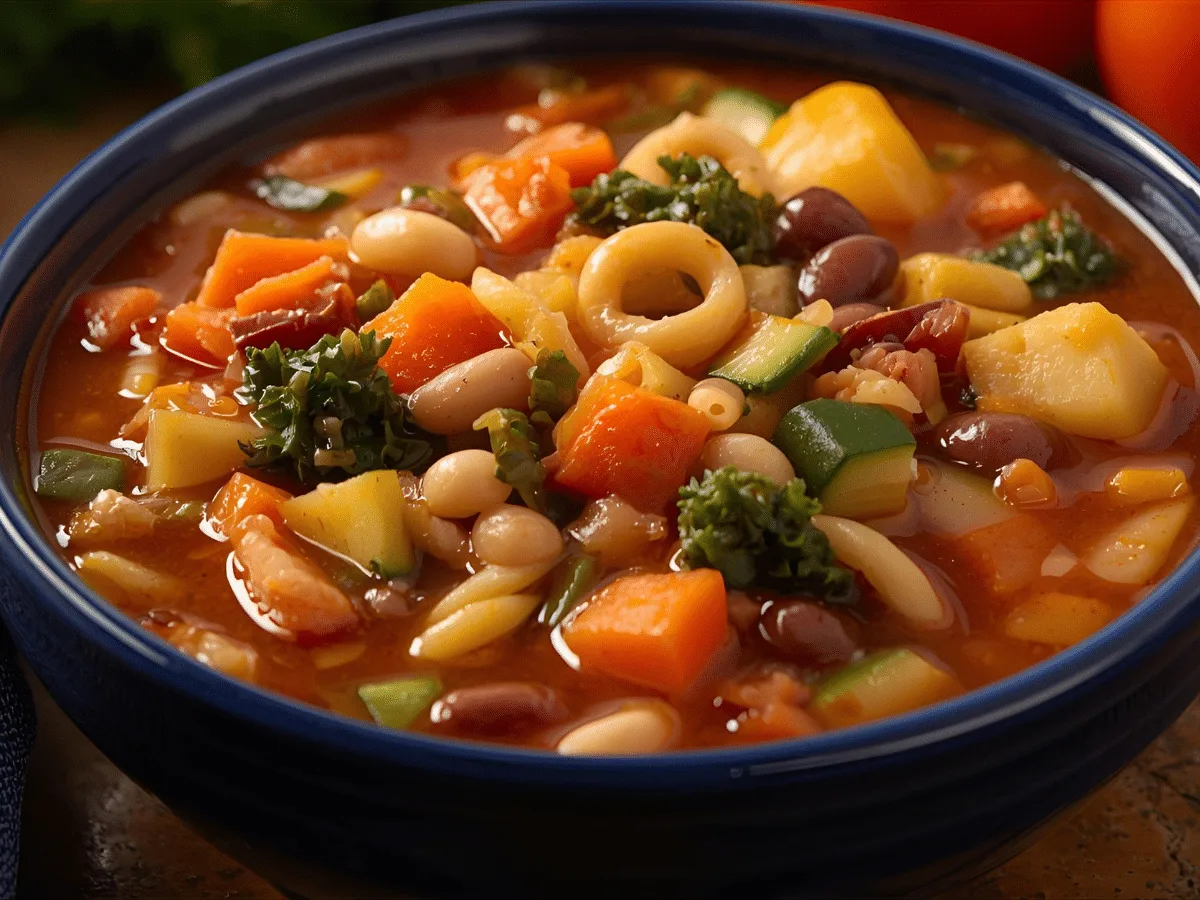
There is something undeniably comforting about walking into an Italian restaurant and smelling the rich aroma of simmering tomatoes and herbs. This Copycat Olive Garden Minestrone Soup captures that exact sensory experience, transporting you straight to a cozy booth with warm breadsticks. Unlike heavy cream-based chowders, this Italian Comfort Food offers a lighter, vegetable-forward profile that warms you from the inside out without weighing you down. It is the definition of a Healthy Hearty Soup, perfectly balancing savory broth with the freshness of garden vegetables. Whether you are looking for a nostalgic dinner or a nutritious lunch option, this bowl delivers restaurant-quality satisfaction right in your own kitchen.
Quick Facts / Recipe Snapshot
This recipe is designed for efficiency without sacrificing flavor.
- Total Time: 35–40 Minutes
- Yields: 6 Generous Servings
- Difficulty Level: Easy / Beginner Friendly
- Dietary Profile: Vegetarian, Vegan-Friendly, Dairy-Free (if omitting cheese garnish)
- Estimated Cost: ~$12.00 for the whole pot
- Key Feature: One-pot cleanup
What Is Olive Garden Minestrone Soup?
At its core, Olive Garden Minestrone Soup is a thick, tomato-based vegetable soup that celebrates the abundance of the harvest. The word “minestrone” literally translates to “big soup” or “thick soup,” implying a dish that is substantial enough to be a meal. While recipes vary across Italy, this specific American-Italian interpretation focuses on a consistent mirepoix base, tender shell pasta, and a duo of beans—usually kidney and white northern beans—simmered in a herbaceous tomato broth. It distinguishes itself from Pasta E Fagioli Soup by including a wider variety of green vegetables like zucchini and green beans, rather than focusing primarily on the pasta-and-bean ratio.
Origins & Inspiration
While the traditional Minestrone traces its roots back to the Latin tribes of Italy—dating back to the Roman Empire when it was a humble peasant dish made from leftovers—this recipe specifically nods to the modern American casual dining experience. The “Olive Garden style” has become a cultural touchstone for Family Dinner in the United States, representing accessible Italian cuisine. This version is special because it strips away the high-sodium preservatives often found in commercial kitchens, returning the dish to its rustic roots while maintaining that specific flavor profile we all crave. It bridges the gap between Old World tradition and modern convenience.
Why You’ll Love This Recipe
You will fall in love with this Minestrone Soup Recipe because it manages to be both robust and refreshing simultaneously. The texture is a delightful interplay between soft beans, chewy pasta, and tender-crisp vegetables, ensuring every bite is interesting. It is incredibly versatile; you can empty your crisper drawer into the pot, and it will still taste amazing. Furthermore, the flavors deepen overnight, making it an exceptional candidate for meal prepping. It is a “dump-and-simmer” miracle that tastes like it cooked all day, providing that “hug in a bowl” feeling that only the Best Minestrone Soup Recipe can offer.
Ingredients & Notes
- 3 tbsp Olive Oil: Extra virgin preferred for sautéing the base.
- 1 cup Onion (diced): Yellow or white onions provide sweetness.
- 1 cup Carrots (chopped): Adds essential crunch and color.
- 1 cup Celery (chopped): Completes the holy trinity of flavor bases.
- 1 medium Zucchini (chopped): Keep chunks bite-sized; do not peel.
- 1 cup Green Beans (fresh or frozen): Cut into 1-inch pieces for spoonability.
- 3 cloves Garlic (minced): Fresh is best, but jarred works in a pinch.
- 1 (28 oz) can Diced Tomatoes: Undrained, to form the broth base.
- 4 cups Vegetable Broth: Low-sodium allows you to control the salt.
- 1 (15 oz) can Red Kidney Beans: Rinsed and drained thoroughly.
- 1 (15 oz) can Great Northern Beans (Cannellini): Rinsed and drained; adds creaminess.
- ½ cup Small Shell Pasta: Ditalini or small elbows also work well.
- 2 cups Spinach (fresh): Baby spinach wilts perfectly at the end.
- 1 tsp Dried Oregano & 1 tsp Dried Basil: The quintessential Italian herb blend.
- Salt & Pepper: To taste.
Step-by-Step Instructions
- Sauté the Aromatics: Heat the olive oil in a large Dutch oven or heavy-bottomed pot over medium-high heat. Add the diced onion, carrots, and celery. Cook for about 5–6 minutes until the onions are translucent, and the carrots begin to soften.
- Add Veggies and Garlic: Toss in the chopped zucchini and green beans. Sauté for another 3 minutes. Add the minced garlic and cook for just 30 seconds until fragrant, being careful not to burn it.
- Build the Broth: Pour in the diced tomatoes (with their juices) and the vegetable broth. Stir in the dried oregano, basil, salt, and pepper. Increase the heat to bring the mixture to a rolling boil.
- Simmer and Soften: Once boiling, reduce the heat to low. Cover the pot and let it simmer gently for 15–20 minutes, allowing the vegetable flavors to meld together.
- Cook Pasta and Beans: Remove the lid and stir in the drained kidney beans, Great Northern beans, and the dry pasta shells. Simmer uncovered for about 10 minutes, or until the pasta is al dente.
- The Final Touch: Turn off the heat. Stir in the fresh spinach immediately. The residual heat will wilt the greens in about 2 minutes, preserving their bright green color. Taste and adjust seasoning before serving.
Tips for Perfect Copycat Olive Garden Minestrone Every Time
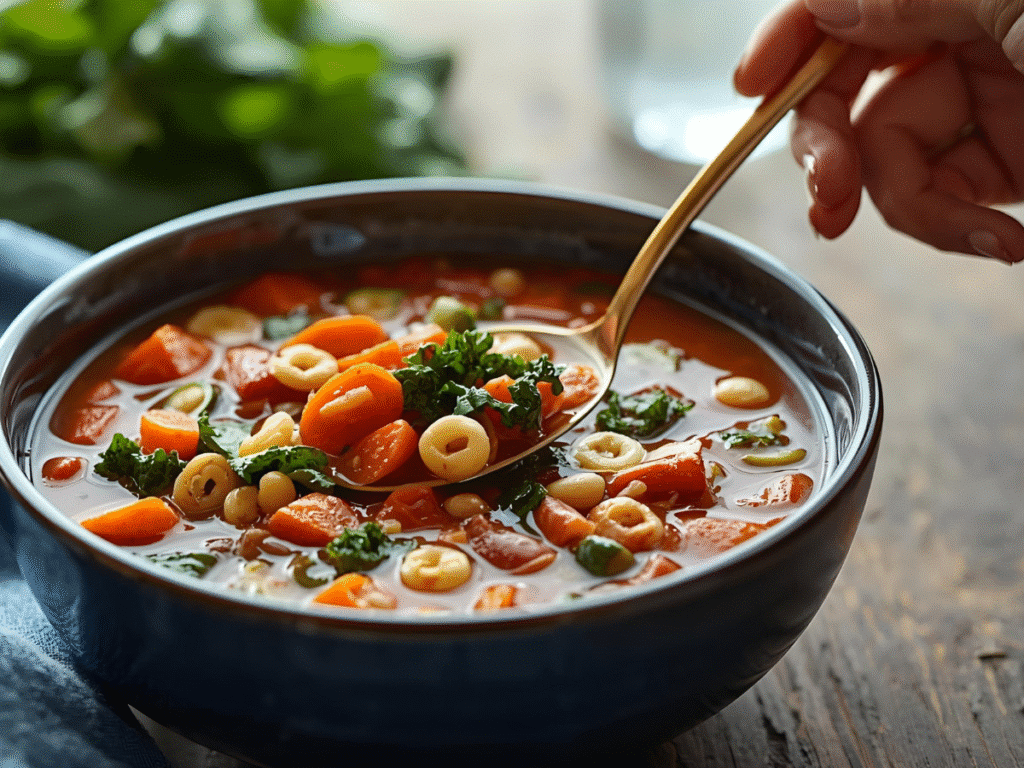
To ensure your soup rivals the restaurant version, pay close attention to your pasta timing. Pasta continues to absorb liquid even after the heat is off, so stop cooking when it is slightly firmer than you prefer (“al dente”). If you plan to freeze the soup, consider cooking the pasta separately and adding it to bowls just before serving; this prevents the noodles from becoming mushy during reheating. Additionally, using a high-quality vegetable broth makes a significant difference in the final depth of flavor. If the soup becomes too thick upon standing, simply splash in a little extra broth or water to reach your desired consistency.
Variations, Swaps & Add-Ins
This Vegetarian Soup Recipe is incredibly forgiving and open to adaptation. For a gluten-free version, simply swap the wheat pasta for a chickpea or brown rice pasta—just be mindful that gluten-free pasta can break down faster. If you prefer a heartier “stew-like” consistency, add diced potatoes or butternut squash during the initial sauté step. For a protein boost without meat, stir in a handful of red lentils, which will dissolve and thicken the broth. Kale can easily replace spinach if you prefer a green with more bite, though it will need to simmer for 5 minutes longer than spinach.
Ingredient Spotlight
Kidney Beans: These dark red legumes are a powerhouse of nutrition and a staple in Italian Garden Soup. Beyond their earthy flavor and creamy texture, they are packed with plant-based protein, fiber, and iron. In Italian cuisine, beans are often referred to as “meat of the poor” because they provide such substantial sustenance. Their robust skin holds up perfectly in soups, ensuring they don’t disintegrate during the simmer, providing a satisfying “chew” that contrasts with the softer vegetables.
Serving Suggestions (Presentation & Plating)
Presentation is key to the Olive Garden experience. Ladle the soup into wide, shallow bowls to show off the colorful array of vegetables. A drizzle of high-quality extra virgin olive oil right before serving adds a glossy finish and a pop of richness. Freshly chopped parsley adds a vibrant green contrast to the deep red broth. For the ultimate restaurant feel, serve the soup piping hot, ensuring the steam carries the aroma of oregano and basil to your guests before they even take the first bite.
Best Sides to Serve With Minestrone
No bowl of Minestrone Soup is complete without carbohydrates for dipping. The classic pairing is, of course, soft, garlic-buttered breadsticks, warm from the oven. For a crispier texture, try toasted focaccia with rosemary or a crusty sourdough baguette. A fresh garden salad with a sharp Italian vinaigrette and pepperoncini cuts through the savory richness of the soup. If you are serving this as a lighter side dish, it pairs beautifully with a grilled vegetable panini or a simple Caprese sandwich.
Flavor Pairing & Beverage Match
The acidity of the tomatoes in this soup calls for a beverage that can stand up to it without being overpowered. A medium-bodied Italian red wine, such as a Chianti or a Sangiovese, complements the herbal notes perfectly. For a white wine option, a Pinot Grigio offers a crisp, dry contrast to the savory beans. If you prefer a non-alcoholic pairing, sparkling water with a twist of lemon or a cranberry-lime spritzer provides a refreshing palate cleanser between bites of the rich, savory broth.
Make-Ahead & Storage Guide
This soup is a champion of Meal Planning. In fact, the flavors often improve on the second day as the herbs infuse the vegetables more deeply. Store leftovers in an airtight container in the refrigerator for up to 4–5 days. To reheat, warm it gently on the stove over medium heat, adding a splash of water if the pasta has soaked up the broth. For freezing, place the cooled soup in freezer-safe bags or containers; it will keep well for up to 3 months. Just remember the pasta tip: if freezing, it is best to leave the pasta out and boil fresh noodles when you are ready to eat.
Budget & Pantry Strategy
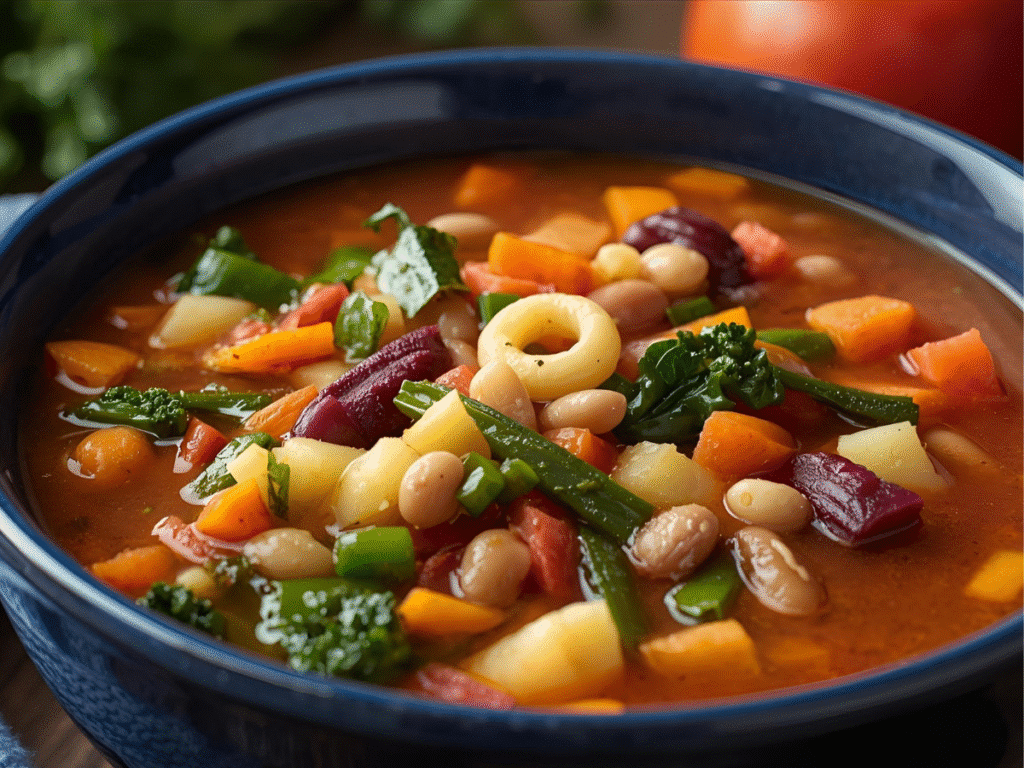
Minestrone is the ultimate “clean out the pantry” meal, making it incredibly budget-friendly. You likely already have the dried herbs, onions, and garlic. Stock up on canned beans and diced tomatoes when they are on sale, as they are the backbone of this recipe. Using frozen green beans instead of fresh is a smart, cost-effective swap that doesn’t compromise nutrition, especially in winter. You can even use the rinds from Parmesan cheese wedges (if you eat dairy)—toss them into the simmering broth to extract flavor and discard before serving, getting every penny’s worth out of your cheese purchase.
Scaling for a Crowd
This recipe doubles or triples easily, making it perfect for potlucks or large family gatherings. When scaling up, ensure you use a pot large enough to handle the volume—a 12-quart stockpot is ideal for a double batch. You do not need to double the cooking time, but it may take longer for the larger volume of liquid to come to a boil. If cooking for a crowd with mixed dietary needs, keep the pasta separate and let guests add it to their bowls; this keeps the main pot gluten-free and keto-friendly (if pasta is omitted entirely).
Weeknight Workflow Planner
For a stress-free Weeknight Dinner, chop all your vegetables (onion, carrots, celery, zucchini) the night before or in the morning and store them in the fridge. This “mise en place” reduces your active cooking time to just 15 minutes. You can also measure out your spices and drain your beans ahead of time. Start the soup as soon as you get home; while it simmers for that 20-minute window, you have the perfect amount of time to toast bread, set the table, or unwind, making a homemade meal achievable even on busy evenings.
Kids & Family Friendly Adaptations
While Minestrone is naturally healthy, some kids might be wary of “chunks.” To make it more kid-friendly, dice the vegetables very small so they blend into the texture of the pasta and beans. You can also swap the traditional shell pasta for fun shapes like bowties or alphabet pasta to make eating more engaging. If your children are sensitive to “green things,” you can puree the spinach into the broth or omit it entirely in favor of sweeter veggies like peas or corn.
Troubleshooting & Fixes
If your soup tastes bland, it usually lacks acid or salt. A squeeze of fresh lemon juice or a splash of balsamic vinegar can wake up the flavors instantly. If the soup is too acidic from the canned tomatoes, add a pinch of sugar or baking soda to neutralize it. If the texture is too watery, mash a cup of the beans against the side of the pot and stir them back in—this releases starch and naturally thickens the liquid without adding flour or cornstarch. If you accidentally overcooked the pasta, add fresh crisp toppings like croutons to reintroduce texture.
Cultural or Seasonal Context
In Italy, Minestrone is strictly seasonal; there is no “fixed” recipe because it depends entirely on what is growing in the garden. A spring version might feature fresh peas and broad beans, while a winter version relies on hearty kale, dried beans, and root vegetables. This specific recipe reflects a “winter-into-spring” bridge, utilizing canned staples for reliability while inviting fresh zucchini and spinach. Serving this dish connects you to a tradition of resourcefulness and seasonality that transcends borders.
FAQs
Can I use fresh tomatoes instead of canned? Yes, use about 2 cups of chopped fresh tomatoes, but you may need to add a tablespoon of tomato paste for depth.
Is this soup spicy? No, it is savory. For heat, add red pepper flakes during the sauté step.
Can I make this in a slow cooker? Absolutely. Sauté veggies first, then dump everything (except pasta/spinach) in the slow cooker on low for 6-8 hours. Add pasta/spinach in the last 30 minutes.
Do I have to use wine? No, this recipe is alcohol-free. The acidity comes from the tomatoes.
Love this recipe? Discover even more!
Explore my Pinterest boards for a world of delicious recipes, fresh ideas, and inspiring flavors. Click here and start pinning your next favorite dish! ➜https://www.pinterest.com/ElitesRecipes/
PrintBest Minestrone Soup Recipe: Authentic Italian Comfort Food Made Simple
A hearty, vegan-friendly copycat version of the famous Olive Garden Minestrone Soup. Packed with fresh vegetables, beans, and pasta in a rich tomato broth.
- Prep Time: 15 minutes
- Cook Time: 25 minutes
- Total Time: 40 minutes
- Yield: 6 servings
- Category: Soup
- Method: Stovetop
- Cuisine: Italian-American
- Diet: Vegan
Ingredients
3 tbsp olive oil
1 cup onion, diced
1 cup carrots, chopped
1 cup celery, chopped
1 medium zucchini, chopped
1 cup green beans, fresh or frozen (1-inch pieces)
3 cloves garlic, minced
1 (28 oz) can diced tomatoes, undrained
4 cups vegetable broth
1 (15 oz) can red kidney beans, drained and rinsed
1 (15 oz) can Great Northern beans, drained and rinsed
1/2 cup small shell pasta (or ditalini)
2 cups fresh spinach
1 tsp dried oregano
1 tsp dried basil
Salt and black pepper to taste
Instructions
1. Heat olive oil in a large pot over medium-high heat.
2. Sauté onion, carrots, and celery for 5-6 minutes.
3. Add zucchini and green beans; cook for 3 minutes.
4. Add garlic and cook for 30 seconds.
5. Stir in tomatoes, broth, oregano, basil, salt, and pepper.
6. Bring to a boil, then reduce heat and simmer covered for 15-20 minutes.
7. Add drained beans and dry pasta.
8. Simmer uncovered for 10 minutes or until pasta is tender.
9. Turn off heat and stir in fresh spinach until wilted.
10. Serve hot with crusty bread.
Notes
Store leftovers in the fridge for up to 5 days.
For freezing, cook pasta separately to avoid mushiness.
Add red pepper flakes for a spicy kick.