
Table of Contents
Exploring the Magic of Japanese Okonomiyaki
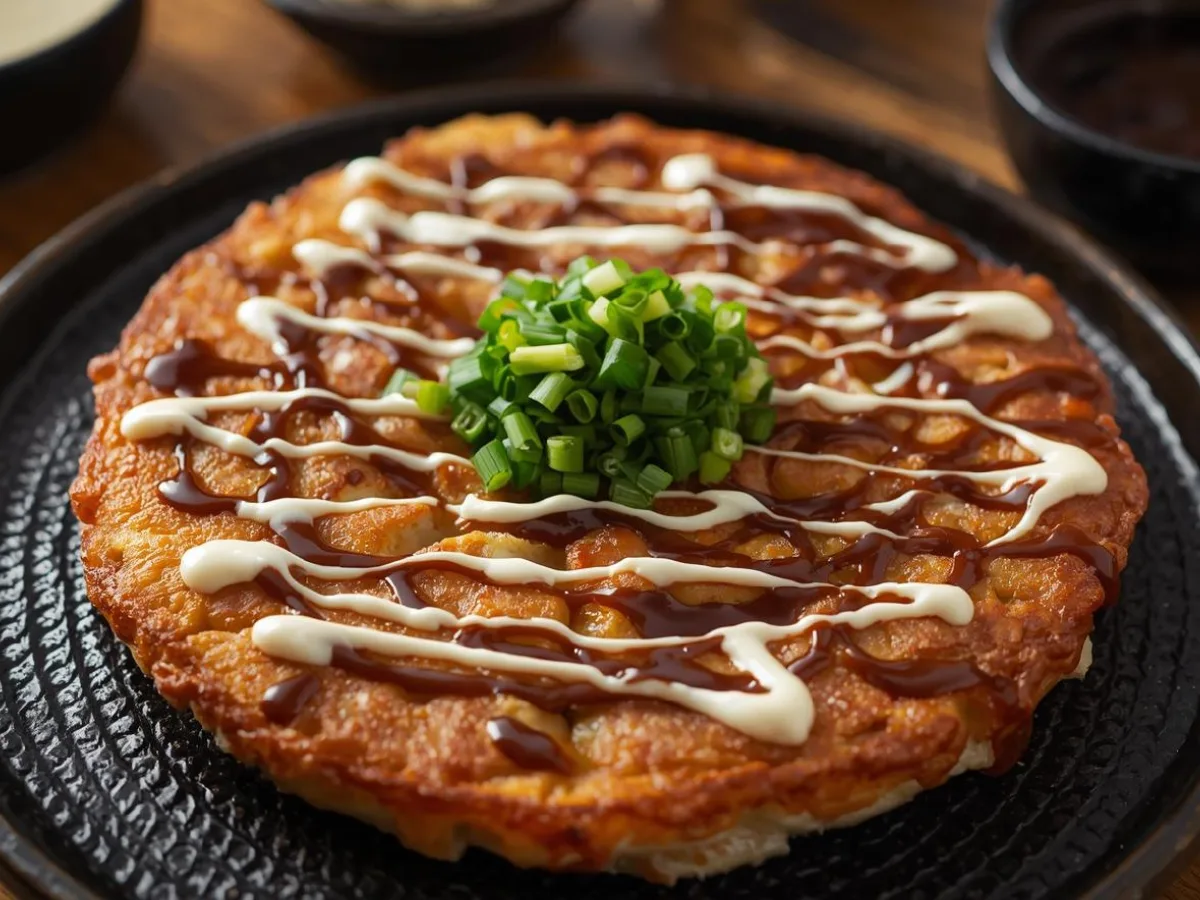
The world of global cuisine is filled with hidden gems, but few are as comforting and customizable as Japanese okonomiyaki. Often described as a Japanese savory pancake, this dish is a cornerstone of Japanese street food culture. Imagine a thick, fluffy batter filled with crunchy cabbage and your choice of proteins, all seared to golden perfection. This Japanese okonomiyaki recipe focuses on a lighter, cleaner version that omits pork and bacon, making it an excellent choice for those seeking healthy Japanese recipes or halal-friendly Asian cooking. The combination of the crispy exterior and the tender, umami-rich interior creates a food experience that is both soul-warming and incredibly satisfying for a weeknight meal.
Quick Facts and Recipe Snapshot
This Japanese okonomiyaki recipe is designed for home cooks of all levels, offering a perfect balance between authenticity and simplicity.
- Total Time: 30 minutes
- Servings: 2 large pancakes
- Difficulty: Easy
- Estimated Cost: $10 – $15
- Specifications: No pork, no bacon, seafood-friendly, easily adaptable for vegetarians.
What Exactly Is Japanese Okonomiyaki?
To understand this dish, one must look at its name: “okonomi” means “how you like it,” and “yaki” means “grilled.” In essence, Japanese okonomiyaki is a savory pancake that allows you to be the chef of your own flavors. Unlike the sweet breakfast pancakes common in the West, this Japanese pancake recipe relies on a savory dashi-based batter. It is dense with shredded cabbage, which provides structure and a natural sweetness when cooked. The texture is a delightful contrast between the charred, crispy outside and the soft, almost custard-like center, making it one of the most unique dinner recipes in Japanese food recipes history.
Origins and Cultural Inspiration
The roots of Japanese okonomiyaki are deeply tied to post-war Japan, specifically in Osaka and Hiroshima. While the Hiroshima style layers ingredients, this version follows the Osaka (Kansai) style, where everything is mixed before hitting the griddle. Historically, it served as a clever way to feed families using whatever ingredients were on hand, embodying the spirit of resourceful Asian cooking. Our version takes inspiration from modern healthy Japanese cooking tips, replacing heavy fats with nutrient-dense cabbage and fresh seafood or mushrooms, ensuring a lighter Japanese dinner that still feels like an authentic food experience.
Why You Will Love This Savory Pancake
You will fall in love with this Japanese okonomiyaki because it hits every sensory note: salty, sweet, crunchy, and soft. It is an incredible recipe for families because it turns cooking into a fun project where everyone can choose their own toppings. Beyond the taste, it is a nutritional powerhouse; the high cabbage content provides fiber, while the eggs and selected proteins offer a satisfying dose of energy. Whether you are looking for healthy lunch recipes or a comforting weeknight dinner, this savory pancake recipe delivers a restaurant-quality meal in under half an hour without the need for specialized equipment.
Ingredients & Notes
- 2 cups Green Cabbage: Finely shredded (the backbone of the pancake).
- 1 cup All-Purpose Flour: Sifted for a light batter (can use gluten-free blends).
- ¾ cup Dashi Stock: Cold (essential for the signature umami flavor).
- 2 large Eggs: Fresh (binds the pancake ingredients together).
- 2 tbsp Pickled Ginger (Beni Shoga): Chopped (adds a bright, acidic pop).
- ¼ cup Tenkasu (Tempura Scraps): Optional (adds crunch and airy texture).
- ½ cup Chopped Shrimp or Squid: Sliced thin (replaces pork for a cleaner protein).
- Topping: Okonomiyaki Sauce: A thick, sweet sauce (store-bought or homemade).
- Topping: Japanese Mayonnaise: Creamy and rich (Kewpie brand is best).
- Garnish: Aonori (Dried Seaweed) and Katsuobushi (Bonito Flakes).
Step-by-Step Instructions
- Prepare the Base: In a large mixing bowl, whisk together the flour and cold dashi stock until a smooth batter forms. Be careful not to overmix to keep the texture light.
- Incorporate the Batter: Add the eggs to the flour mixture and whisk gently. The batter should be slightly thick but pourable.
- Mix the Fillings: Fold in the finely shredded cabbage, chopped pickled ginger, and tempura scraps. Ensure every strand of cabbage is lightly coated in batter.
- Heat the Pan: Lightly oil a non-stick skillet or griddle over medium heat. Once hot, ladle half of the mixture into the center, forming a circle about 1 inch thick.
- Add Proteins: Place your chopped shrimp or seafood evenly over the top of the pancake, pressing them slightly into the batter.
- The First Flip: Cover the pan and cook for 5-6 minutes until the bottom is golden brown. Carefully flip the pancake using two spatulas.
- Final Sear: Cook the second side uncovered for another 5 minutes until the seafood is cooked through and the pancake is firm.
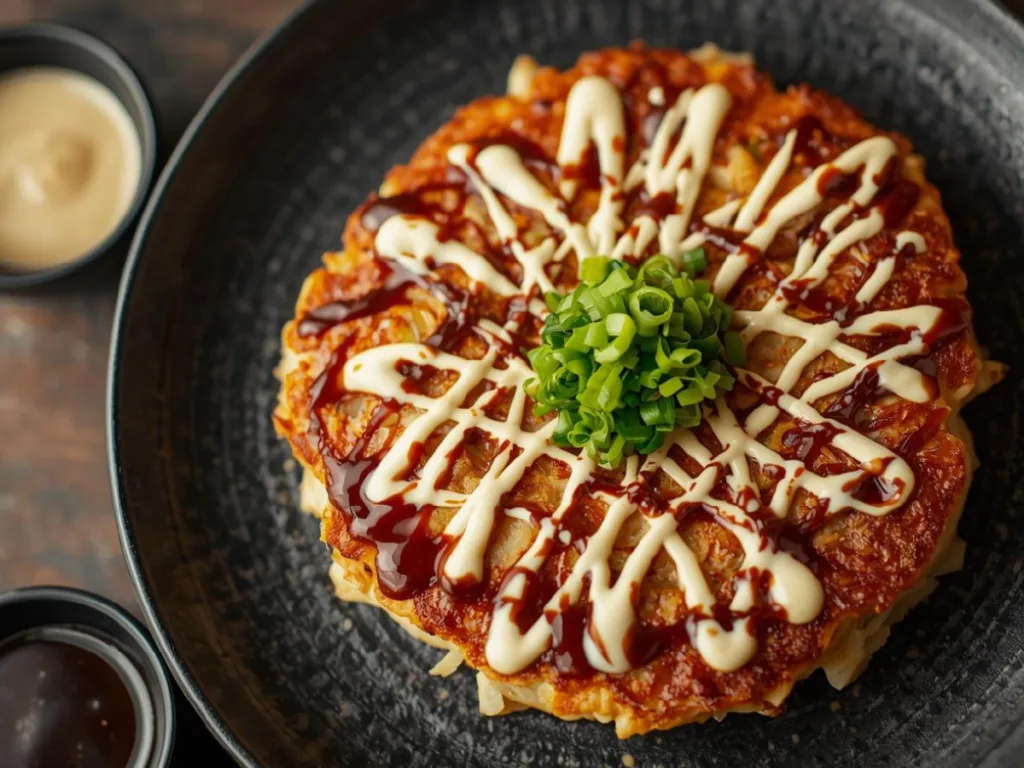
- Decorate and Serve: Transfer to a plate. Brush generously with the sweet sauce, drizzle with mayonnaise in a zig-zag pattern, and sprinkle with aonori and bonito flakes.
Tips for Perfect Japanese Okonomiyaki Every Time
The secret to a perfect Japanese okonomiyaki lies in the temperature of your pan. If the heat is too high, the outside will burn before the cabbage softens; if too low, it will become greasy. Aim for a steady medium heat that allows the steam to cook the interior while the surface crisps up. Another pro tip is to never press down on the pancake with your spatula while it cooks; you want to maintain those air pockets created by the cabbage and tempura scraps to ensure a fluffy, light result rather than a dense, heavy disc.
Variations, Swaps, and Creative Add-Ins
While this recipe is pork-free, you can easily adapt it to your dietary needs. For a vegetarian version, swap the dashi for a kombu-based broth and replace the seafood with sliced shiitake mushrooms or shredded cheese. If you enjoy a bit of heat, adding chopped kimchi to the batter provides a wonderful fusion twist. For those exploring healthy Japanese recipes, you can use whole wheat flour or even a mix of almond flour for a lower-carb alternative, though the texture will vary slightly from the traditional Japanese street food style.
Ingredient Spotlight: Cabbage and Dashi
Cabbage is the unsung hero of this Japanese okonomiyaki recipe. When sliced thinly, it wilts just enough to become tender while retaining a satisfying bite. Nutritionally, it is packed with Vitamin C and K. Complementing this is the dashi stock, which provides the foundational “umami” that makes Japanese food recipes so addictive. Dashi is typically made from kombu (kelp) and bonito flakes, though vegan versions using only kelp are widely available. Understanding these two components is key to mastering the art of the savory pancake recipe.
Serving Suggestions for a Visual Feast
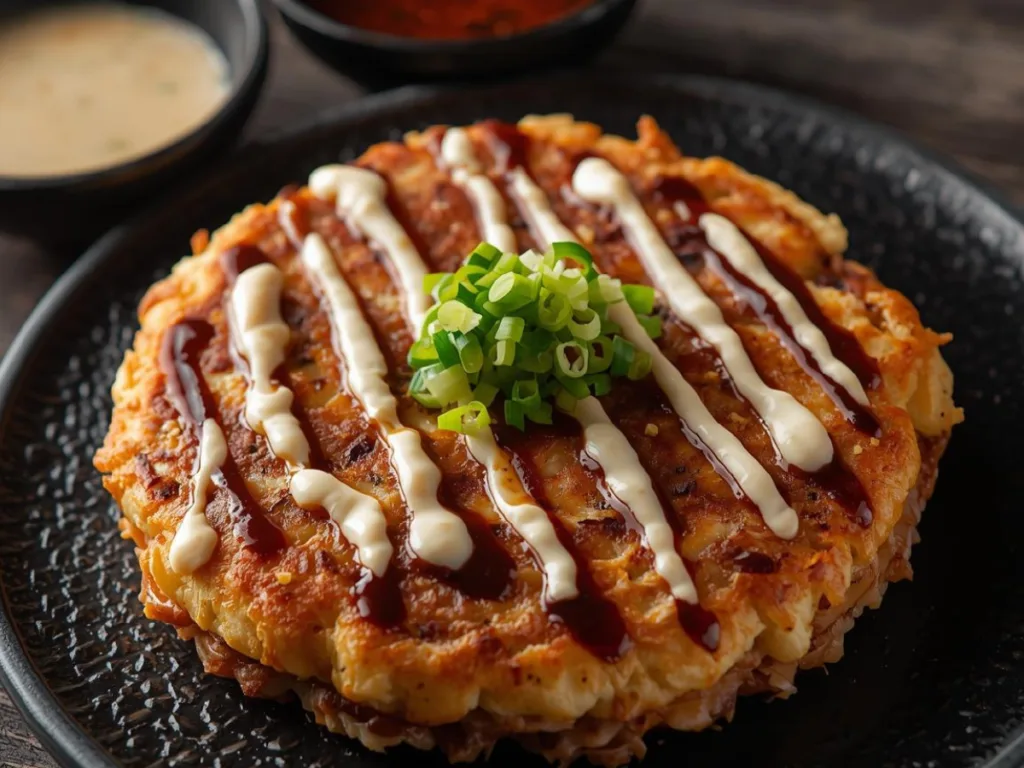
Presentation is everything in Japanese street food. To achieve that professional look, use a squeeze bottle for your Japanese mayonnaise to create thin, elegant lines. You can use a toothpick to drag through the lines of sauce and mayo to create a beautiful marbled pattern. Serving the Japanese okonomiyaki on a dark ceramic plate makes the vibrant green of the aonori and the pink of the pickled ginger stand out, turning your weeknight meal into a gourmet food experience.
Best Sides to Pair with Savory Pancakes
While okonomiyaki is a complete meal on its own, it pairs beautifully with light, refreshing sides. A simple sunomono (cucumber salad) with a rice vinegar dressing helps cut through the richness of the mayo and sauce. Alternatively, a warm bowl of miso soup or a side of edamame seasoned with sea salt can round out the Japanese dinner experience. If you are serving this for a crowd, consider a small portion of cold soba noodles to provide a different texture and temperature profile.
Flavor Pairing and Beverage Match
The bold, sweet-and-savory flavors of Japanese okonomiyaki demand a beverage that can hold its own. For a non-alcoholic option, a chilled green tea or a fizzy Ramune soda provides a refreshing contrast. If you prefer an adult beverage, a crisp Japanese lager or a dry sake works wonderfully to cleanse the palate between bites. The carbonation in beer specifically helps to lift the richness of the fried batter and creamy toppings, making every bite feel as fresh as the first.
Make-Ahead and Storage Guide
You can easily prep the ingredients for this Japanese okonomiyaki recipe in advance. Shred the cabbage and store it in an airtight container for up to two days. The batter can also be made a few hours ahead and kept in the fridge. If you have leftovers, they store well in the refrigerator for up to 3 days. To reheat, avoid the microwave as it can make the pancake soggy; instead, use a dry skillet over low heat or a toaster oven to bring back that signature crispy exterior.
Budget and Pantry Strategy
This is a highly cost-effective dish that relies on pantry staples, such as flour and eggs. Cabbage is one of the most affordable vegetables available year-round, making this a great recipe for budget-conscious families. To save money, you can make your own okonomiyaki sauce by mixing ketchup, Worcestershire sauce, and a bit of honey. By keeping dashi powder and aonori in your pantry, you can whip up this authentic Japanese street food whenever the craving strikes without a special trip to the grocery store.
Scaling for a Large Crowd
If you are hosting a Japanese-themed dinner party, Japanese okonomiyaki is a fantastic choice. You can double or triple the batter and cabbage quantities easily. The best way to serve a crowd is to use a large electric griddle so you can cook four or five pancakes simultaneously. Alternatively, you can make mini-okonomiyaki, which work perfectly as appetizers. Ladle smaller portions of batter and top them individually, allowing guests to watch the “dancing” bonito flakes as they are served hot.
Weeknight Workflow Planner
Efficiency is key to a successful weeknight meal. Start by shredding your cabbage first thing, as this takes the most time. While the cabbage rests, whisk your batter and prep your toppings. Once the pan is hot, the actual cooking time is quite fast. You can even chop the pickled ginger and green onions during the 5 minutes the first side is cooking. This streamlined workflow ensures that you go from prep to plate in exactly 30 minutes, leaving more time to enjoy your healthy Japanese dinner.
Kids and Family Friendly Adaptations
Children often love the mild, sweet flavor of the okonomiyaki sauce and the fun “pancake” format. To make it even more kid-friendly, you can omit the pickled ginger if they are sensitive to spice and replace the seafood with corn or mild cheese. Letting kids help with the “decorating” phase—drizzling the mayo and sprinkling the seaweed—makes them more excited to eat their vegetables. It is a brilliant way to introduce young palates to global cuisine and Asian cooking in a familiar way.
Troubleshooting and Common Fixes
If your Japanese okonomiyaki is falling apart when you flip it, your batter might be too thin; try adding a tablespoon more of flour. If the center feels raw but the outside is brown, your heat is too high; lower it and cover the pan to let the steam finish the job. For a pancake that feels too heavy, ensure you aren’t over-mixing the cabbage into the batter. A light hand is essential for keeping those air pockets intact, ensuring your savory pancakes remain fluffy and light rather than dense.
Cultural and Seasonal Context
While enjoyed year-round, Japanese okonomiyaki is a staple at summer matsuri (festivals) across Japan. The sight of giant griddles covered in sizzling pancakes is iconic. In the winter, it serves as a soul-warming comfort food that brings families together around a shared table. Because you can use seasonal vegetables like kale or sprouts in place of cabbage, it is a recipe that evolves with the seasons, making it a versatile addition to your repertoire of incredible recipes for any time of year.
Frequently Asked Questions (FAQs)
Can I make this without dashi? Yes, you can substitute with chicken or vegetable broth, though the flavor will be less traditional.
Is there a substitute for Japanese mayo? You can mix regular mayo with a pinch of sugar and a drop of rice vinegar.
Can I freeze okonomiyaki? Yes, wrap cooked pancakes tightly in plastic and freeze for up to a month.
How do I make it gluten-free? Use a 1-to-1 gluten-free flour blend and ensure your dashi and sauces are certified gluten-free.
Love this recipe? Discover even more!
Explore my Pinterest boards for a world of delicious recipes, fresh ideas, and inspiring flavors. Click here and start pinning your next favorite dish! ➜https://www.pinterest.com/ElitesRecipes/
PrintBest Japanese Okonomiyaki Recipe
A fluffy and authentic Japanese savory pancake filled with crunchy cabbage and seafood, drizzled with a rich sweet sauce and creamy mayo. A perfect healthy dinner option.
- Prep Time: 15 minutes
- Cook Time: 15 minutes
- Total Time: 30 minutes
- Yield: 2 servings
- Category: Dinner
- Method: Pan-Fried
- Cuisine: Japanese
Ingredients
2 cups green cabbage, finely shredded
1 cup all-purpose flour
3/4 cup dashi stock, cold
2 large eggs
2 tbsp pickled ginger (beni shoga), chopped
1/4 cup tenkasu (tempura scraps)
1/2 cup shrimp or mushrooms, chopped
2 tbsp neutral oil
Okonomiyaki sauce, for topping
Japanese mayonnaise, for topping
Aonori (seaweed flakes), for garnish
Katsuobushi (bonito flakes), for garnish
Instructions
1.Whisk flour and cold dashi until smooth.
2.Add eggs and whisk gently to combine.
3.Fold in cabbage, ginger, and tenkasu until coated.
4.Heat oil in a skillet over medium heat.
5.Pour half the batter to form a 1-inch thick circle.
6.Top with shrimp or mushrooms and cover.
7.Cook 5-6 minutes until golden, then flip.
8.Cook 5 minutes more uncovered until done.
9.Brush with sauce, drizzle mayo, and garnish.
Notes
Use kombu dashi for a vegetarian version.
Do not press down on the pancake while cooking.
Reheat in a dry skillet to maintain crispiness.