
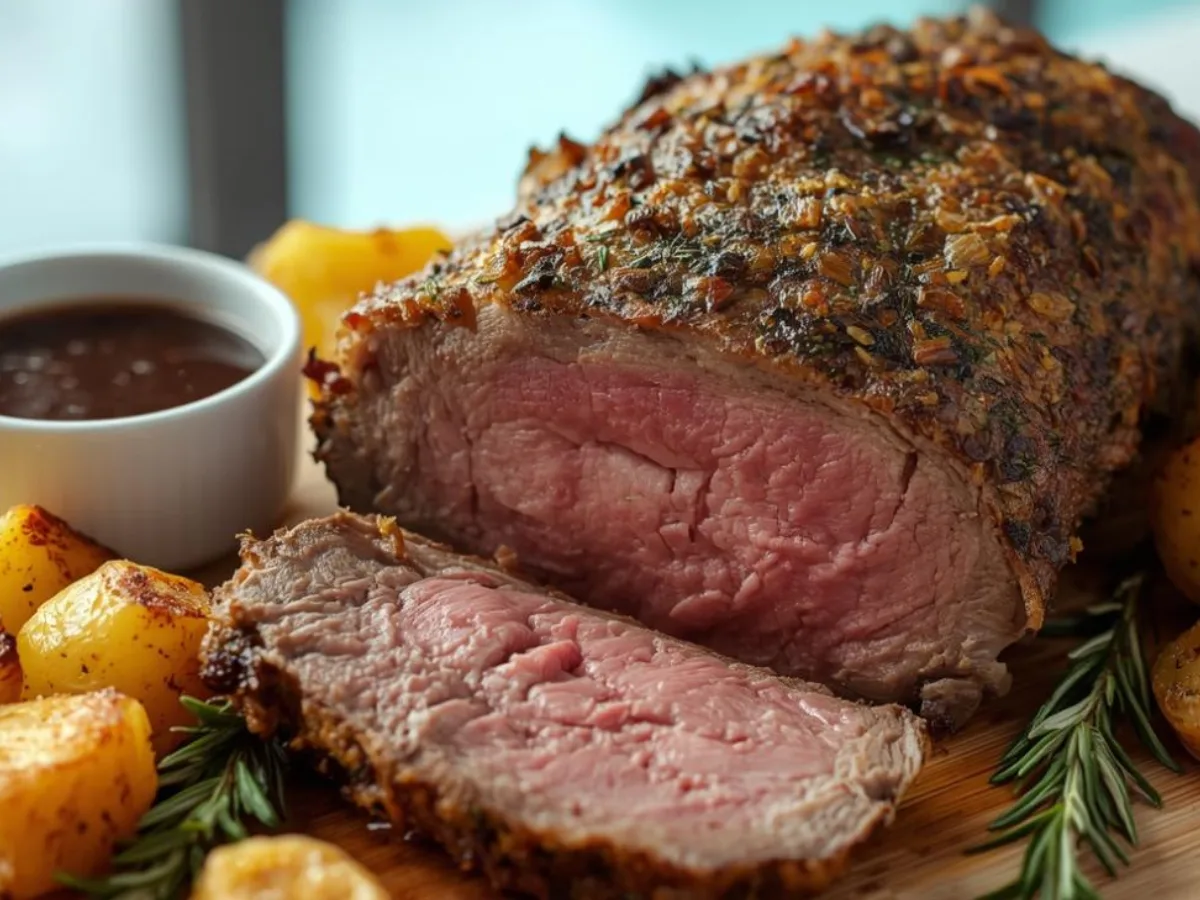
There is something uniquely majestic about an Oven-Roasted Prime Rib sitting at the center of a dining table. It represents the pinnacle of home-cooked luxury, promising a succulent, tender experience that few other cuts of beef can match. Whether you are hosting an intimate anniversary or a grand family gathering, this dish brings a sophisticated atmosphere and a deep, savory aroma that fills the home. The beauty of this recipe lies in its simplicity; by respecting the meat and using the right techniques, anyone can achieve a restaurant-quality result that is perfectly pink from edge to edge.
Quick Facts / Recipe Snapshot
Preparing an oven-roasted prime rib requires patience rather than complex skills. The total time depends on the size of your roast, typically averaging about 15 minutes of active prep followed by 2 to 4 hours of roasting and resting. This recipe is designed for a 7lb to 12lb roast, making it ideal for serving 6 to 12 people. It is a naturally gluten-free and low-carb option, making it an excellent choice for various dietary needs. While the cost is higher than a standard roast, the premium quality and flavor justify the investment for special occasions.
What Is This Classic Roast?
An oven-roasted prime rib, often referred to as a Standing Rib Roast, is a premium cut of beef from the primal rib section. It is known for its exceptional marbling, which melts during the cooking process to baste the meat from within, resulting in a buttery texture and intense beef flavor. Unlike a standard pot roast, this cut is meant to be roasted dry and served medium rare to preserve its natural juices and tenderness. The “standing” part of the name comes from the traditional method of roasting the beef on its bones, which act as a natural rack.
Origins & Personal Inspiration
The tradition of the Sunday roast has deep roots in British culinary history, but the Oven Roasted Prime Rib has become a definitive icon of American celebratory dining. I remember the first time I attempted this roast; the pressure of handling such a prized piece of meat was immense, yet the reward was a lifelong passion for perfecting the sear. This version draws inspiration from modern American steakhouses, blending traditional roasting methods with a bold garlic and herb rub that enhances rather than masks the high-quality beef.
Why You’ll Love This Recipe
You will fall in love with this oven-roasted prime rib because it removes the intimidation factor from gourmet cooking. The sensory experience is unmatched: the golden-brown, salty crust gives way to a velvety, melt-in-your-mouth interior that is consistently medium rare. It is a foolproof method that relies on internal temperature rather than guesswork, ensuring success even if it is your first time. Furthermore, the simplicity of the seasoning allows the rich, natural flavor of the prime rib to shine through as the undisputed star of the meal.
Ingredients & Notes
- Prime Rib Roast: 7lb to 12lb, bone-in or boneless (Bone-in provides more flavor and a natural roasting rack).
- Unsalted Butter: 1 cup, softened (Acts as the carrier for the herb rub and helps create the crust).
- Fresh Garlic: 6 cloves, minced (Essential for that classic savory aroma).
- Fresh Rosemary: 2 tablespoons, finely chopped (Adds a piney, earthy depth).
- Fresh Thyme: 2 tablespoons, finely chopped (Provides a subtle, floral herbal note).
- Kosher Salt: 2 tablespoons (Crucial for seasoning and moisture retention).
- Black Pepper: 1 tablespoon, coarsely ground (Adds a necessary bite to the crust).
Step-by-Step Instructions
- Preparation: Remove the roast from the refrigerator at least 2 hours before cooking to bring it to room temperature for even roasting.
- Preheat: Set your oven to $450^{\circ}F$ ($230^{\circ}C$) to prepare for the initial high-heat sear.
- The Herb Rub: In a small bowl, combine the softened butter, minced garlic, rosemary, thyme, salt, and pepper until it forms a thick paste.
- Seasoning: Pat the roast completely dry with paper towels, then generously slather the garlic butter rub over the entire surface of the meat.
- Initial Sear: Place the roast in a heavy roasting pan and sear at $450^{\circ}F$ for 15 to 20 minutes to develop a deep brown crust.
- Slow Roast: Lower the oven temperature to $325^{\circ}F$ ($160^{\circ}C$) and continue roasting until the internal temperature reaches $120^{\circ}F$ for rare or $130^{\circ}F$ for medium rare.
- Resting: Transfer the roast to a cutting board and tent loosely with foil, letting it rest for at least 30 minutes to allow the juices to redistribute.
Tips for a Perfect Roast Every Time
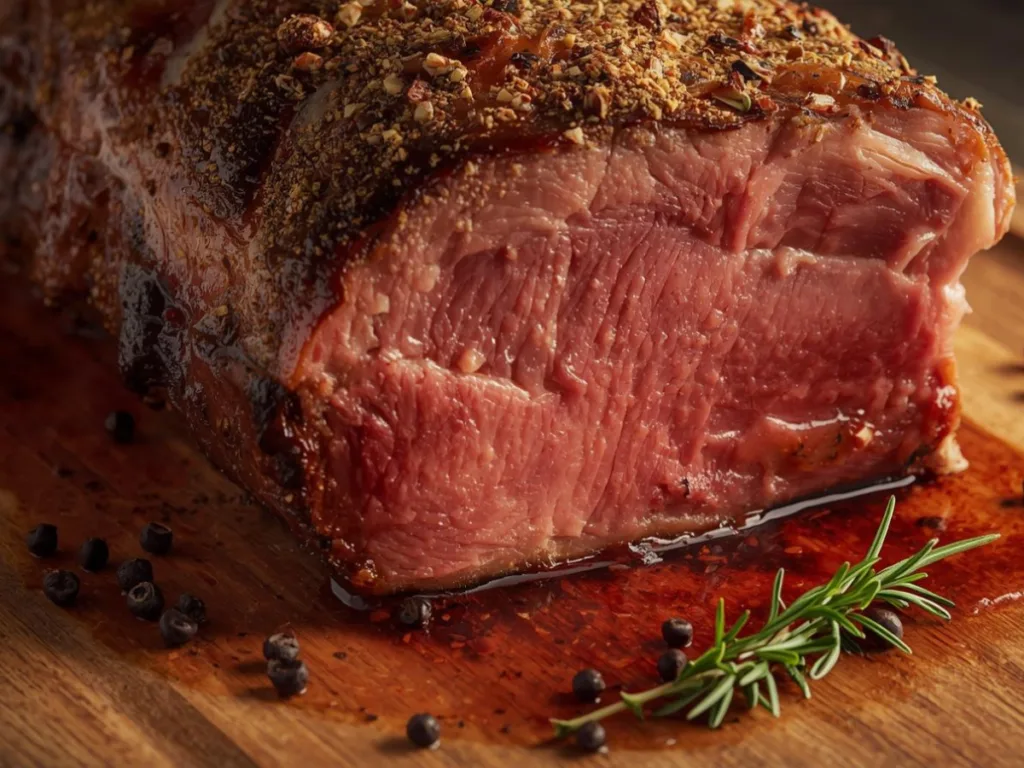
Achieving the best oven-roasted prime rib requires a reliable meat thermometer; never rely solely on time-per-pound charts, as every oven and roast is different. Ensure you do not skip the resting period, as cutting the meat too early will cause all the precious juices to run out, leaving you with dry beef. If you prefer a more pronounced crust, you can leave the roast uncovered in the fridge overnight to dry out the surface. Always slice against the grain to ensure every piece is as tender as possible for your guests.
Variations, Swaps & Add-Ins
While the garlic herb rub is a classic, you can customize your oven-roasted prime rib by adding a tablespoon of horseradish to the butter for a spicy kick. For a deeper umami profile, try adding a splash of Worcestershire sauce or a teaspoon of mushroom powder to the rub. If you don’t have fresh herbs, high-quality dried herbs can work, though you should use about half the amount. For those who enjoy a smokier flavor, a touch of smoked paprika or finishing the roast on a pellet grill can add a wonderful dimension.
Ingredient Spotlight: The Prime Rib
The focal point of this recipe is the beef itself, specifically the 12 lb prime rib roast oven selection, which offers incredible marbling. This intramuscular fat is what distinguishes a prime rib from a leaner sirloin, providing the richness that makes it a “prime” choice. Nutritiously, it is a powerhouse of protein, B vitamins, and zinc, making it a satiating and nutrient-dense centerpiece. Choosing a “Prime” grade over “Choice” when possible will yield the most tender and flavorful results due to the higher fat content within the muscle.
Serving Suggestions & Plating
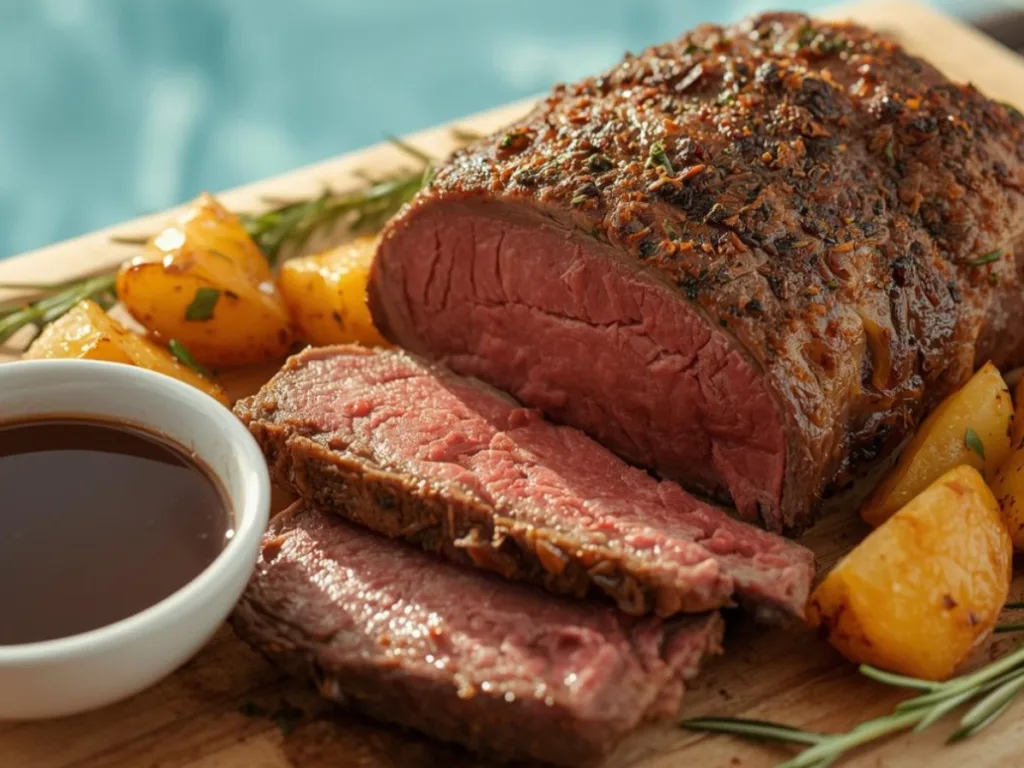
To present your oven-roasted prime rib beautifully, slice it into thick, generous portions and arrange them overlapping on a large, warmed platter. Garnish the edges with fresh sprigs of rosemary and thyme to echo the flavors in the rub. Serving the meat alongside a small bowl of homemade au jus or a creamy horseradish sauce allows guests to customize their flavor experience. The vibrant pink of the medium-rare meat contrasted with the dark, herb-flecked crust creates a stunning visual that requires very little extra decoration.
Best Sides to Serve Along
A majestic oven-roasted prime rib deserves sides that can stand up to its rich flavor profile. Classic choices include creamy garlic mashed potatoes or a decadent potato gratin to soak up the au jus. Roasted root vegetables like carrots and parsnips provide a natural sweetness that balances the savory beef perfectly. For a lighter touch, a crisp wedge salad with blue cheese dressing or steamed green beans with toasted almonds offers a refreshing contrast to the richness of the meat and butter rub.
Flavor Pairing & Beverage Match
The bold flavors of an oven-roasted prime rib are traditionally paired with a full-bodied red wine like Cabernet Sauvignon or Malbec, which has enough tannins to cut through the fat of the beef. If you prefer white wine, a heavily oaked Chardonnay can complement the buttery crust surprisingly well. For non-alcoholic options, a sparkling grape juice or a robust pomegranate mocktail provides a sophisticated acidity. The key is to choose a drink with enough structure to stand alongside the intense beefy notes.
Make-Ahead & Storage Guide
While the oven-roasted prime rib is best served fresh, you can prepare the garlic butter rub a day in advance and keep it in the refrigerator. Leftover roast should be stored in an airtight container for up to 3 days and is delicious when served cold in sandwiches. To reheat without overcooking, place slices in a baking dish with a splash of beef broth, cover with foil, and warm in a $250^{\circ}F$ oven until just heated through. Avoid the microwave, as it will toughen the meat and ruin the medium-rare texture.
Budget & Pantry Strategy
Buying a whole oven-roasted prime rib can be a significant expense, so look for sales during major holiday seasons when retailers often offer deep discounts. You can save money by purchasing a larger roast and having the butcher cut it into smaller portions to freeze for later use. Utilize your pantry staples like salt, pepper, and dried herbs if fresh ones are out of budget. The bones from a standing rib roast should never be thrown away; they make an incredible base for a rich, homemade beef stock or soup.
Weeknight Workflow Planner
While this is often a weekend dish, you can make an oven-roasted prime rib feasible for a weeknight by doing all the prep the night before. Apply the rub and leave the roast in the fridge uncovered; this not only saves time but also improves the crust. On the day of cooking, take the meat out as soon as you get home to take the chill off. Since the roast is largely hands-off once it is in the oven, you can use that time to prepare simple sides or decompress from your day.
Kids & Family Friendly Adaptations
Children often prefer their meat without heavy herbal textures, so you might consider leaving the herbs off one end of the roast for the younger diners. Slicing the meat into smaller, bite-sized cubes can make it more manageable for toddlers. If the medium rare pink color is off-putting to some family members, the end cuts are typically more well-done and provide the perfect solution. Serving the au jus on the side in a “dipping cup” can also make the meal more interactive and fun for kids.
Frequently Asked Questions
How long does it take to cook a 12 lb prime rib roast oven style?
At $325^{\circ}F$, you should plan for approximately 15 minutes per pound for rare or 18-20 minutes for medium rare, but always use a thermometer for accuracy.
Should I cook the roast covered or uncovered?
You should always roast the beef uncovered to allow the dry heat to create a beautiful, savory crust on the exterior.
What is the best way to get a pink center?
The secret is the “low and slow” method after an initial high-heat sear, combined with pulling the meat out $5-10$ degrees before your target temperature.
Can I use a boneless roast for this recipe?
Yes, a boneless oven-roasted prime rib works perfectly; just reduce the cooking time slightly, as it may cook faster than the bone-in version.
Love this recipe? Discover even more!
Explore my Pinterest boards for a world of delicious recipes, fresh ideas, and inspiring flavors. Click here and start pinning your next favorite dish! ➜https://www.pinterest.com/ElitesRecipes/
PrintOven-Roasted Prime Rib
A foolproof guide to achieving a succulent, medium-rare Oven Roasted Prime Rib with a savory garlic herb crust.
- Prep Time: 15 minutes
- Cook Time: 3 hours
- Total Time: 3 hours 45 minutes
- Yield: 8-12 servings
- Category: Main Course
- Method: Oven Roasted
- Cuisine: American
Ingredients
7–12 lb Prime Rib Roast (bone-in or boneless)
1 cup unsalted butter, softened
6 cloves garlic, minced
2 tbsp fresh rosemary, chopped
2 tbsp fresh thyme, chopped
2 tbsp kosher salt
1 tbsp black pepper
Instructions
1. Preheat oven to 450°F (230°C).
2. Pat the roast dry and apply the garlic herb butter rub.
3. Sear at 450°F for 15-20 minutes.
4. Lower temperature to 325°F (160°C).
5. Roast until internal temperature reaches 130°F.
6. Rest for 30 minutes before carving.
Notes
Resting is mandatory for juiciness.
Use a probe thermometer for accuracy.
Bones can be used for beef stock later.