
Table of Contents
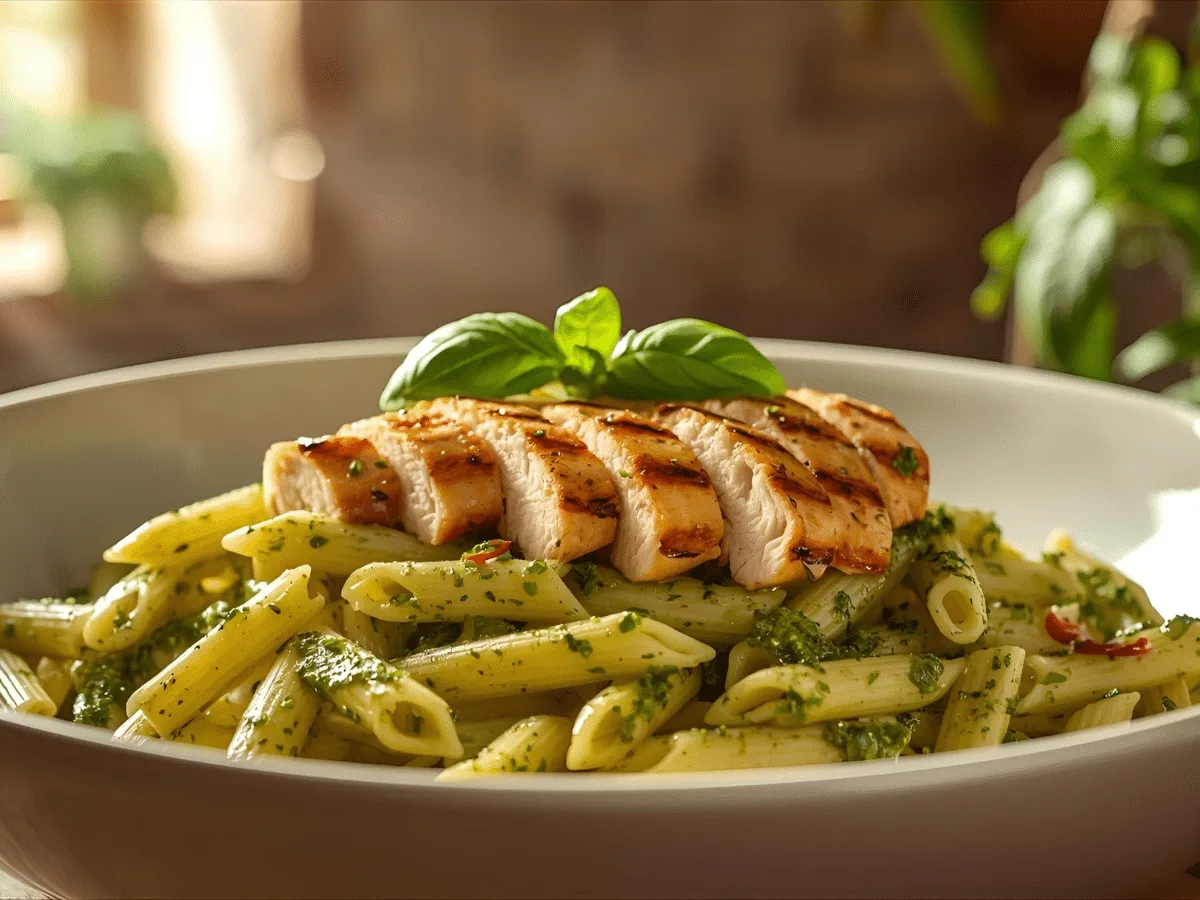
Imagine a dinner that transports you straight to a sun-drenched Italian terrace, yet comes together in your own kitchen faster than you can order delivery. This Basil Pesto Chicken Pasta is exactly that culinary escape. It is a vibrant symphony of flavors featuring tender, golden-seared chicken, bright and herbaceous basil pesto, and the subtle sweetness of blistered cherry tomatoes. The dish strikes a perfect balance between comfort and freshness, offering a creamy, velvety texture that clings to every noodle without feeling overly heavy. It is the kind of meal that feels special enough for a date night but is practical enough for a chaotic Tuesday evening.
Quick Facts
- Total Time: 25 Minutes
- Prep Time: 10 Minutes
- Cook Time: 15 Minutes
- Servings: 4 People
- Difficulty: Easy / Beginner Friendly
- Estimated Cost: $15 – $20
- Dietary Info: High Protein, Can be made Gluten-Free
What Is Basil Pesto Chicken Pasta?
At its core, Basil Pesto Chicken Pasta is a modern Italian-American fusion dish that celebrates the boldness of Genovese pesto. Unlike traditional dry pasta dishes, this recipe often incorporates a touch of cream or starchy pasta water to emulsify the pesto into a luscious sauce that coats the protein and carbohydrates evenly. It is a hearty main course that marries the herbaceous punch of crushed basil, garlic, pine nuts, and parmesan with the savory satisfaction of lean poultry. The result is a texturally diverse bowl where soft pasta meets chewy chicken and crunchy pine nut garnishes.
Origins & Inspiration
While pesto itself originates from Genoa in the Liguria region of Italy, the combination of creamy pesto with chicken is a distinctly modern adaptation, popular in American bistros and home kitchens. Traditional Italian cooking rarely pairs chicken with pasta in this specific manner, but this hybrid has become a beloved staple in the West. This particular version is inspired by the need for quick, nutritious meals that don’t sacrifice flavor. It draws from the concept of “pasta al pesto” but elevates it with protein to create a standalone meal, reflecting the contemporary desire for one-bowl dinners that satisfy all nutritional bases.
Why You’ll Love This Recipe
You will fall in love with this Basil Pesto Chicken Pasta because it delivers maximum flavor with minimal effort. The aroma of garlic and basil filling your kitchen is instantly mood-lifting. It is incredibly versatile; you can serve it hot for a comforting dinner or cold as a sophisticated pasta salad for lunch the next day. The creamy pesto sauce offers a luxurious mouthfeel that appeals to both adults and children alike. Plus, it is a fantastic way to use up a bumper crop of summer basil or a high-quality jar of store-bought pesto when you are short on time.
Ingredients & Notes
- 1 lb (450g) Boneless, Skinless Chicken Breasts: Cut into bite-sized 1-inch pieces. You can also use chicken thighs for a juicier result.
- 1 lb (450g) Penne or Fusilli Pasta: Short pasta shapes work best to hold the creamy sauce.
- 1 cup Basil Pesto: Homemade is best for vibrant color, but a high-quality refrigerated store-bought brand works wonders.
- 1 cup Cherry Tomatoes: Halved. These add a burst of acidity and sweetness to cut through the richness.
- ½ cup Heavy Cream (Optional): For that irresistible velvety finish. Substitute with half-and-half for a lighter version.
- 2 tbsp Olive Oil: For searing the chicken and blooming the aromatics.
- 3 cloves of Garlic: Minced fresh garlic adds a savory depth that jarred garlic cannot match.
- ½ cup Parmesan Cheese: Freshly grated. Avoid the shaker can for better melting.
- Salt & Black Pepper: To taste.
- Fresh Basil Leaves: For garnish and extra freshness.
- ¼ cup Pine Nuts (Optional): Toasted, for a buttery crunch garnish.
Step-by-Step Instructions
- Boil the Water: Bring a large pot of salted water to a rolling boil. Add the pasta and cook according to package directions until al dente. Reserve ½ cup of starchy pasta water before draining.
- Sear the Chicken: While the pasta cooks, heat olive oil in a large skillet over medium-high heat. Add the diced chicken pieces, season generously with salt and pepper, and cook for 6-8 minutes until golden brown and cooked through.
- Aromatize: Lower the heat to medium. Add the minced garlic to the skillet with the chicken and sauté for 1 minute until fragrant, being careful not to burn it.
- Create the Sauce: Reduce the heat to low. Stir in the basil pesto and heavy cream (if using). Stir gently until the sauce is warmed through and combined with the chicken juices.
- Combine: Add the cooked, drained pasta to the skillet. Toss everything together to coat the pasta evenly in the creamy green sauce. If the sauce is too thick, splash in a little of the reserved pasta water to loosen it up.
- Add Freshness: Gently fold in the halved cherry tomatoes and half of the parmesan cheese. Let the residual heat soften the tomatoes slightly.
- Serve: Divide into bowls. Garnish with remaining parmesan, fresh basil leaves, and toasted pine nuts. Serve immediately.
Tips for Perfect Basil Pesto Chicken Pasta Every Time
To ensure your Basil Pesto Chicken Pasta is flawless, always salt your pasta water like the sea; this is the only chance to season the pasta itself. Avoid cooking the pesto over high heat for too long, as this can cause the basil to turn a dull olive color and the cheese in the pesto to separate/break. The secret to a cohesive dish is the “marriage” step: tossing the pasta and sauce together in the pan for a minute allows the starch to bind the oils and cream into a unified, glossy coating rather than a slippery separation.
Variations, Swaps & Add-Ins
This recipe is a blank canvas for your culinary creativity. For a vegetarian twist, swap the chicken for chickpeas or simply double the vegetables. If you love heat, a pinch of red pepper flakes adds a wonderful kick that contrasts with the creamy basil notes. You can replace the heavy cream with Greek yogurt or cream cheese for a tangier, protein-rich sauce, though be sure to temper it to prevent curdling. Vegetables like sautéed spinach, asparagus spears, or sun-dried tomatoes make excellent additions, increasing the nutrient density and adding visual pop.
Ingredient Spotlight
Basil Pesto (Pesto alla Genovese) is the star of this show. Traditionally made with Genovese basil, coarse salt, garlic, Ligurian extra virgin olive oil, European pine nuts, and grated cheese like Parmigiano-Reggiano or Pecorino, it is a raw sauce that preserves the vitamins and antioxidants of the fresh herbs. The basil provides a potent dose of Vitamin K and anti-inflammatory properties, while the olive oil and nuts offer heart-healthy monounsaturated fats. Using fresh pesto elevates the dish from a simple pasta to a fragrant culinary experience.
Serving Suggestions (Presentation & Plating)
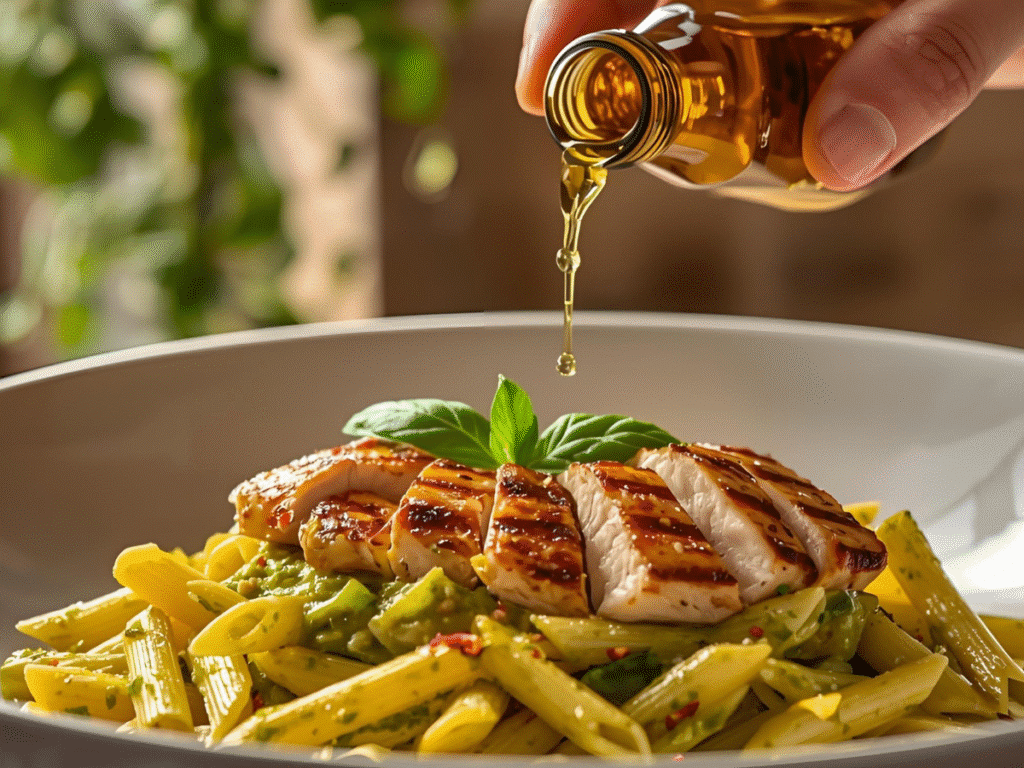
Serve this Basil Pesto Chicken Pasta in wide, shallow rimmed bowls to showcase the beautiful contrast between the green sauce and red tomatoes. A drizzle of high-quality extra virgin olive oil right before serving adds a professional sheen and a hit of raw flavor. Top with a generous mountain of fluffy, freshly grated Parmesan cheese. For a restaurant-quality touch, place a sprig of fresh basil distinctively on top or scatter microgreens for a modern aesthetic.
Best Sides to Serve With Basil Pesto Chicken Pasta
Balance the richness of the creamy pesto sauce with lighter, crisp sides. A simple arugula salad with a lemon vinaigrette is the perfect palate cleanser, its peppery bite complementing the sweet basil. Garlic bread or focaccia is almost mandatory for mopping up any leftover sauce at the bottom of the bowl. For a vegetable-heavy side, try roasted broccolini with lemon zest or simple steamed green beans. A chilled Caprese salad also echoes the tomato and basil theme beautifully.
Flavor Pairing & Beverage Match
The herbaceous and garlic notes of the pesto pair wonderfully with crisp, acidic white wines. A Sauvignon Blanc or a Pinot Grigio helps cut through the creaminess of the dish. For a red wine lover, a light Chianti or Pinot Noir works well without overpowering the basil. Non-alcoholic options include sparkling water with a twist of lime or a homemade iced tea infused with lemon and mint, which mirrors the fresh herbal notes of the pasta.
Make-Ahead & Storage Guide
Basil Pesto Chicken Pasta stores surprisingly well, making it a great candidate for meal prep. Store leftovers in an airtight container in the refrigerator for up to 3-4 days. When reheating, do so gently on the stove or in the microwave at 50% power; you may need to add a splash of water or milk to bring the creamy emulsion back to life, as the pasta will absorb the liquid over time. Freezing is not recommended for this creamy version, as the dairy and pesto can separate upon thawing, ruining the texture.
Budget & Pantry Strategy
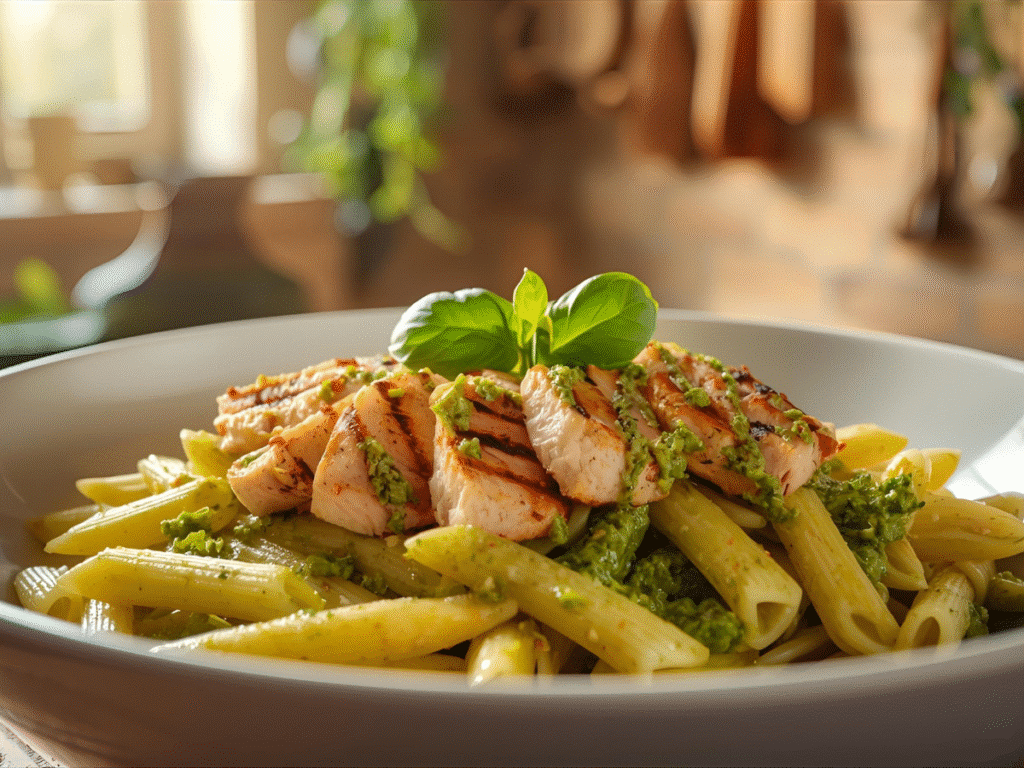
This meal is budget-friendly if you shop smartly. Chicken breasts can be replaced with more affordable chicken thighs. Pine nuts are expensive, so feel free to substitute them with walnuts or sunflower seeds in your homemade pesto, or omit them entirely in the garnish. Buying a large jar of pesto from a wholesale club is often more economical than small jars, and leftover pesto freezes beautifully in ice cube trays for future meals. Using dried pasta is a pantry staple that keeps costs low while filling bellies effectively.
Scaling for a Crowd
To feed a crowd of 6, 10, or even 20 people, this recipe scales linearly with ease. Use a Dutch oven or a very large stockpot to toss the ingredients together. When doubling or tripling the recipe, ensure you don’t overcrowd the pan when searing the chicken; do it in batches to ensure it browns rather than steams. You can pre-cook the pasta and shock it in cold water to stop the cooking, then reheat it directly in the hot sauce when ready to serve. This “restaurant method” prevents the pasta from becoming mushy while you wait for guests.
Weeknight Workflow Planner
For the ultimate weeknight efficiency, start by putting the water on to boil immediately. While the water heats, dice your chicken and halve the tomatoes. By the time the water boils and the pasta drops, your skillet should be hot and ready for the chicken. While the chicken sears and pasta cooks, you have a 10-minute window to grate the cheese and set the table. This parallel processing ensures the entire meal hits the table in under 25 minutes, keeping stress levels low and satisfaction high.
Kids & Family Friendly Adaptations
Children often love the bright green “monster sauce” color of pesto, but if they are picky about “green bits,” you can use a smooth blended pesto. To make it more kid-friendly, cut the chicken into smaller, nugget-sized pieces and increase the cream ratio for a milder, Mac-and-Cheese-like consistency. You can also swap penne for fun shapes like bowties (farfalle) or spirals (rotini), which are easier for little hands to manage. Omitting the red pepper flakes ensures it’s palatable for sensitive taste buds.
Troubleshooting & Fixes
If your sauce breaks and looks oily, don’t panic; remove it from the heat and vigorously whisk in a splash of warm water or cream to re-emulsify it. If the pasta seems dry, the reserved pasta water is your best friend—add it slowly until the glossy texture returns. If the dish tastes flat, it likely needs more salt or a squeeze of fresh lemon juice to wake up the flavors. If the chicken turned out dry, shredding it and mixing it thoroughly with the ample sauce can disguise the texture effectively.
Cultural or Seasonal Context
In the United States, Basil Pesto Chicken Pasta has become a harbinger of spring and summer, coinciding with the basil harvest. However, thanks to hydroponics and quality jarred sauces, it is now a year-round staple. It represents the “California Italian” style of cooking—fresh, produce-forward, and relatively light compared to heavy, baked red-sauce dishes. It’s a popular choice for potlucks and outdoor picnics because it holds its structure well and tastes delicious at room temperature.
FAQs
1. Can I use store-bought pesto? Absolutely. While homemade is fresher, high-quality store-bought pesto is a fantastic time-saver. Look for brands that use olive oil rather than sunflower oil for the best flavor.
2. Is this recipe gluten-free? It can easily be! Simply substitute the wheat pasta for your favorite gluten-free brown rice or chickpea pasta. Double-check that your store-bought pesto is certified gluten-free (some use breadcrumbs as thickeners).
3. Can I use rotisserie chicken? Yes, using shredded rotisserie chicken makes this recipe even faster. Simply add the cooked chicken in step 4 to warm it through with the sauce, skipping the searing step.
4. Why is my pesto bitter? Pesto can become bitter if the basil is oxidized or if the olive oil is old. Adding a squeeze of lemon juice or a pinch of sugar can help balance out any bitterness in the final dish.
Love this recipe? Discover even more!
Explore my Pinterest boards for a world of delicious recipes, fresh ideas, and inspiring flavors. Click here and start pinning your next favorite dish! ➜https://www.pinterest.com/ElitesRecipes/
PrintFresh Basil Pesto Chicken Pasta
A vibrant and comforting creamy pesto chicken pasta dish packed with fresh basil flavor, tender chicken, and juicy cherry tomatoes. Ready in just 25 minutes.
- Prep Time: 10 minutes
- Cook Time: 15 minutes
- Total Time: 25 minutes
- Yield: 4 servings
- Category: Dinner
- Method: Stovetop
- Cuisine: Italian-American
Ingredients
1 lb (450g) boneless skinless chicken breasts, diced
1 lb (450g) penne or fusilli pasta
1 cup basil pesto (homemade or store-bought)
1 cup cherry tomatoes, halved
1/2 cup heavy cream (optional)
2 tbsp olive oil
3 cloves garlic, minced
1/2 cup grated Parmesan cheese
1/4 cup pine nuts (optional)
Salt and black pepper to taste
Fresh basil leaves for garnish
Instructions
1. Boil salted water and cook pasta to al dente; reserve 1/2 cup water.
2. Sear diced seasoned chicken in olive oil until golden.
3. Add minced garlic and sauté briefly.
4. Lower heat; stir in pesto and cream.
5. Toss in cooked pasta and coat evenly.
6. Fold in tomatoes and cheese.
7. Garnish with basil and pine nuts.
8. Serve immediately.
Notes
Use gluten-free pasta if needed.
Store leftovers in fridge for 3 days.
Add spinach for extra veggies.